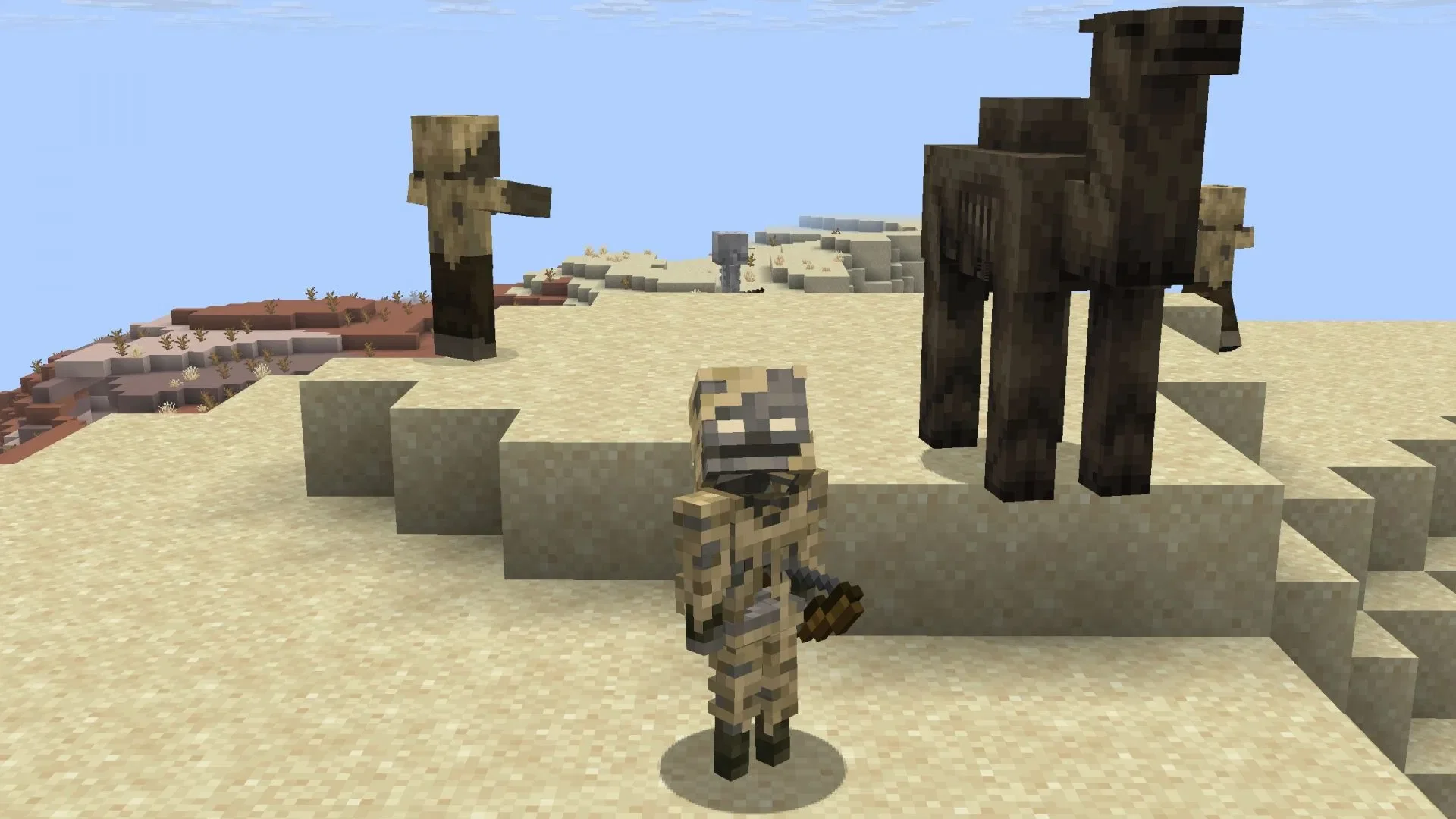

For many Minecraft players, the first time they see the Channeling enchantment, they probably think the same thing: it looks incredibly cool. Throwing a Trident during a thunderstorm and watching a bolt of lightning strike directly onto your target is undeniably dramatic. However, if you only view it as a "lightning summoning effect," you are truly underestimating this enchantment.
The real appeal of Channeling isn't just that it lets players pose like the God of Thunder; it’s that it ties weather, positioning, targets, and combat outcomes together. In other words, it isn't a "plug-and-play" enchantment that makes you mindlessly overpowered. Instead, it is a tool with strict requirements that becomes devastatingly effective once those conditions are met. Many people find it cumbersome, but that’s only because they haven't realized its true strength: it’s not about constant damage output, but the ability to turn the tide of battle at a critical moment.
Let’s clarify the basic rules first. Channeling can only be applied to a Trident, and it only has one level: Channeling I. Its effect is straightforward: when you throw a Trident enchanted with Channeling at a target, and it hits an entity or a lightning rod, the game generates a lightning bolt at the target's location. The catch lies right there—it’s not something you can just toss around on a sunny day. The most common mistake players make is ignoring the weather and the requirement for an open sky.
In most combat scenarios, you need to wait for a thunderstorm. Furthermore, the target cannot be hiding under eaves, in caves, under tree canopies, or beneath any other obstructions; it must be directly exposed to the sky. If the target is standing in water, lava, powder snow, or is stuck in certain block states, Channeling may also fail. While this limitation seems annoying, it defines the enchantment's role: it is not a universal weapon for underground mining, but a specialized tool for outdoor combat during thunderstorms.

There is another detail that often causes confusion: regular rain and thunderstorms are not the same thing. When striking mobs with Channeling, don't expect it to summon lightning just because it's raining. However, if you are playing the Bedrock edition, throwing a Channeling Trident at a lightning rod can trigger lightning even during regular rain. As for the Java edition, the rules are strictly tied to thunderstorm conditions. If this distinction isn't clear, players might try it, see no results, and mistakenly assume the enchantment is broken.
So, what can it actually do? The most intuitive benefit is the extra damage and the ignition of the surrounding ground. The Trident itself already deals ranged damage, and the added lightning bolt increases both the visual impact and the pressure on your opponent. This is especially effective when dealing with monsters or other players on a server in open areas, as it makes your presence impossible to ignore. However, I believe its greatest value isn't the damage numbers, but its ability to actively trigger lightning-based transformations that are otherwise difficult to achieve consistently.
For example, when a Creeper is struck by lightning, it becomes a Charged Creeper—this isn't just for show; it significantly increases the explosion threat. Villagers turn into Witches, pigs become Zombified Piglins, and Mooshrooms switch between red and brown variants. In essence, Channeling is a key that controls mob state changes, not just a weapon.
If you are looking to collect mob heads, the Charged Creeper mechanic becomes even more vital. Waiting for a natural lightning strike is purely a matter of luck; with a Channeling Trident, you can at least shift the process from "leaving it to fate" to "taking action once the weather is right." It still requires a thunderstorm, but once the weather arrives, you are no longer just standing by and praying—you can actively drive the process forward.
Obtaining it isn't complicated. You can use an enchanting table to roll for it—ideally with 15 bookshelves set up to maximize your chances of getting high-level combinations—or you can obtain a Channeling enchanted book and combine it with a Trident using an anvil. Enchanted books can be found through fishing, trading with Librarian villagers, or as loot in structures like mineshafts, desert temples, ocean ruins, strongholds, ancient cities, and trial chambers. For most players, villager trading is the most reliable route.
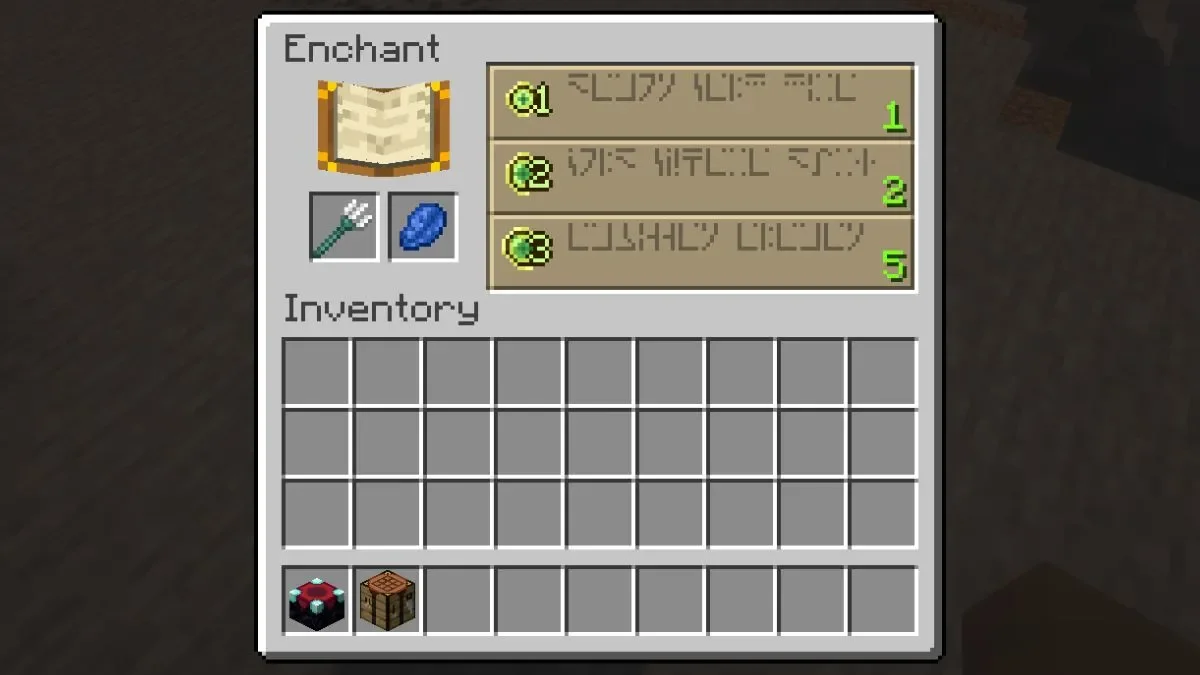
The real dilemma is that it cannot coexist with Riptide. This choice says a lot about your playstyle. Channeling favors combat, crowd control, and special mob manipulation, while Riptide favors mobility, making it perfect for dashing through rain or water, or even turning the Trident into a movement tool in specific environments. If you just want to travel, pounce, and enjoy mobility, Riptide is the better choice. If you want to set up plays during thunderstorms, create Charged Creepers, or complete specific advancements, Channeling is the correct answer.
Therefore, I don't recommend keeping your Channeling Trident as a standalone piece of gear. A better setup includes Loyalty, Mending, and Unbreaking, with Impaling as an optional addition. Loyalty ensures the Trident returns to you, while Mending and Unbreaking extend its lifespan. After all, Tridents aren't exactly common items you can pick up anywhere; the last thing you want is to throw your hard-earned Channeling Trident and be unable to retrieve it.
There are also two advancements related to Channeling. One is Very Very Frightening, which requires you to strike a villager with lightning, and the other is Surge Protector, which requires you to protect a villager from lightning without starting a fire. They are interesting because Channeling turns lightning from a random weather event into a mechanic that players can design around. You are no longer just waiting for the world to happen; you are using the rules to orchestrate the outcome.
Ultimately, Channeling is often underestimated because it looks like an enchantment designed solely for flair. But once you truly master it, you realize that its barrier to entry and its value are one and the same: the weather restriction prevents it from being mindlessly overpowered, the open-sky requirement prevents it from being used everywhere, and its incompatibility with Riptide forces you to define your Trident's role. It isn't for everyone, but it is perfect for those who enjoy diving deep into combat and game mechanics.
If you just want a standard ranged weapon for everyday mob fighting, Channeling might not be useful every day. But if you enjoy researching mob transformations, head collection, thunderstorm combat, or simply want your Trident to have the power to truly change the battlefield, then it’s not just a gimmick—it’s a choice with real character. The only question left is: will you keep a dedicated Channeling Trident for those occasional but impactful moments? Or would you rather commit your Trident to Riptide for the sake of immediate, fluid mobility?