The hardest part has never been recreating a game like Minecraft. The real challenge is that after spending over a decade cramming that gameplay loop into almost every console, knowing every limitation and every compromise, you still have to convince yourself not to just slap a new coat of paint on the old answer and sell it again.
This is precisely the starting point for 4J Studios with Reforj. Since 2012, this Scottish team has been responsible for the long-term porting and updating of Minecraft on consoles. Their understanding of blocks, performance, and controller-based input is arguably closer to the player's experience than many newcomers. But the most interesting thing about their new project isn't leveraging their veteran status for nostalgia; it’s acknowledging a realistic fact: the era of relying solely on a single licensing income will eventually come to an end.
After Microsoft acquired Mojang, it gradually brought development in-house. Brian Gomez, Executive Producer and Creative Director at 4J Studios, recalls that the studio saw this trend coming around 2019. Continuing to put all their chips on Minecraft would only increase the risk. So, instead of rushing to make a clone with different textures or monsters, the team first asked their engineers: if we were to build an open-world voxel engine from scratch today, which old problems should we leave behind?
The answer was written into two strict rules: no matter how chaotic the explosions on screen get, the frame rate must remain stable at 60 FPS; and the entire control scheme must be designed for controllers and modern consoles from day one. It sounds like a purely engineering-focused approach, but it hits exactly where these games are most frustrating. Players aren't afraid of a large world; they are afraid of frame drops, loading stutters, and system lag when they are working hard to hollow out a mountain or tearing down terrain with friends. Once a building game turns creation into waiting, no amount of beautiful lighting can make up for it.
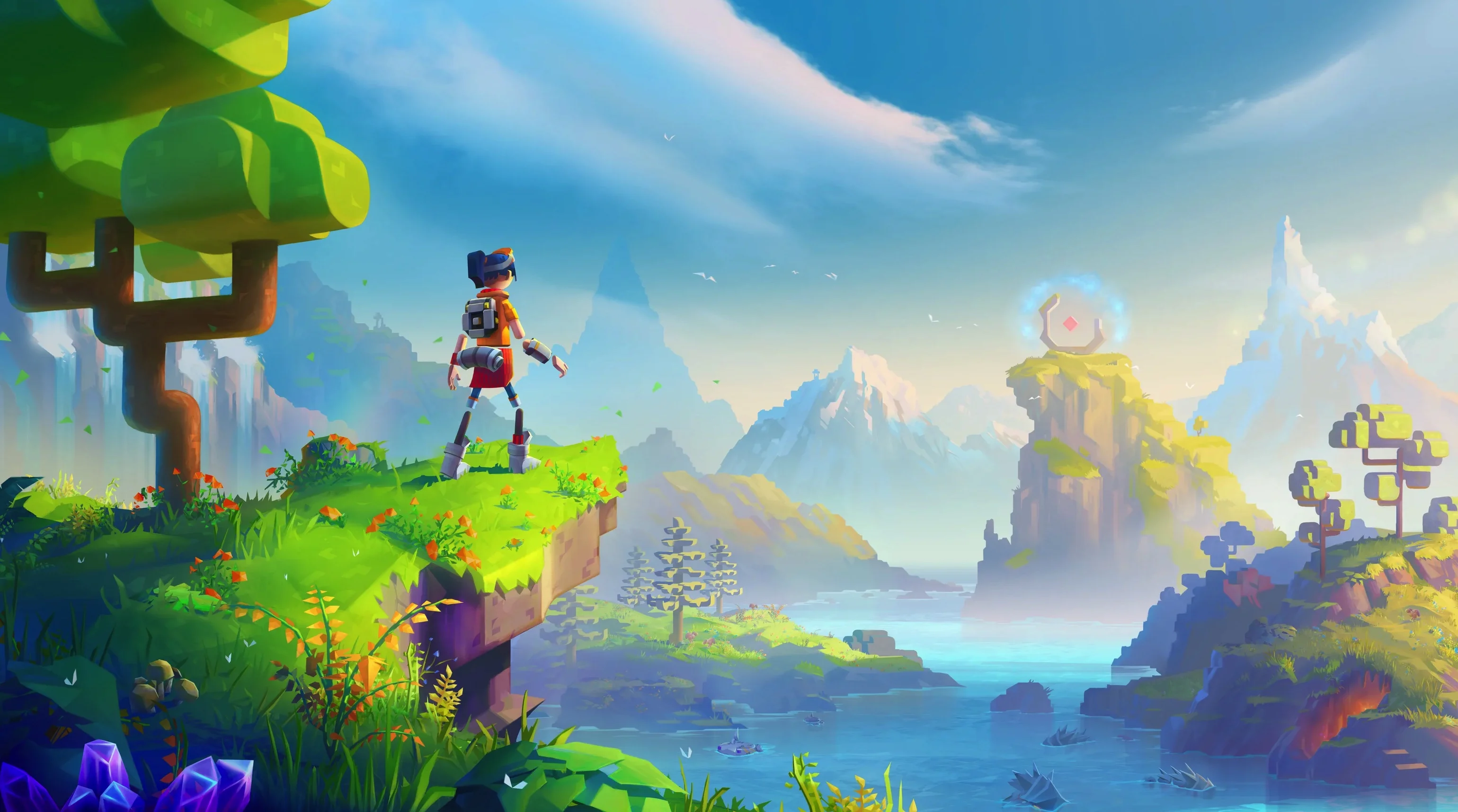
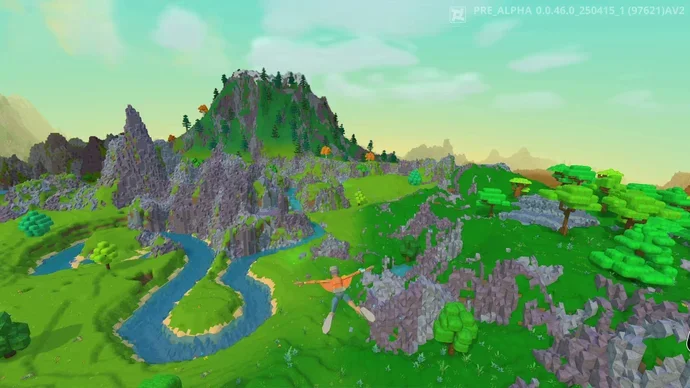
Years later, 4J Studios turned this technology into the Elements Engine, which eventually led to Reforj. It is, of course, still a voxel sandbox focused on survival, gathering, and building, but the world is not an infinitely expanding plane. Each world is a fully destructible toroidal asteroid about 4 kilometers in length; walking to the edge loops you back to the other side, while portals connect to even larger exploration spaces. This limitation isn't about laziness; it’s about trading an infinite, boundary-less fantasy for stable destruction effects and controllable performance.
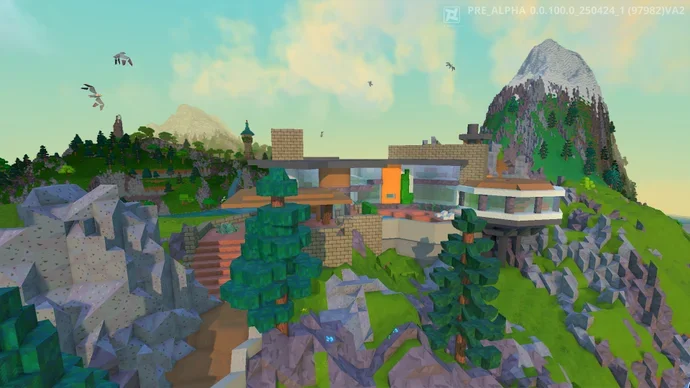
A more obvious difference is Reforj's rebellion against the "blocky feel." The charm of Minecraft comes from the unified language of 1×1 blocks; anyone who picks up a controller knows how to build a wall or make stairs. But after using this language for so long, the details become locked within the grid. Reforj allows players to first outline a house with blocks, then use sculpting tools to cut specific blocks directly into stairs, slopes, curves, and other shapes. The team cites a figure of 660 different forms.
This isn't just about "finer graphics." The difference lies in the mindset during construction: in the past, you would repeatedly test recipes, place blocks, and break blocks just for an eave; now, you can get the volume right first, then slowly carve out the edges you want. For those who excel at large-scale architecture, this is an enticing kind of freedom. But it comes at a cost: the more detailed the rules, the more players need to relearn what feels intuitive. Whether 4J Studios can make sculpting feel as natural as placing a block is far more important than the number 660.
They haven't pinned all their complexity on architecture, either. The Aura energy in the game drives devices through reflective blocks and light beams; distributors, AND/OR logic gates, and signal inverters are already present. Playtesters have even used it to build a playable version of Space Invaders. This system easily brings redstone to mind, but Reforj's ambition goes beyond just a different way of wiring: the more Aura you collect, the more likely the insect-like Tunnellers are to target your world. Resources, mechanisms, and defense are tied together; players can't just focus on making their circuits look pretty.
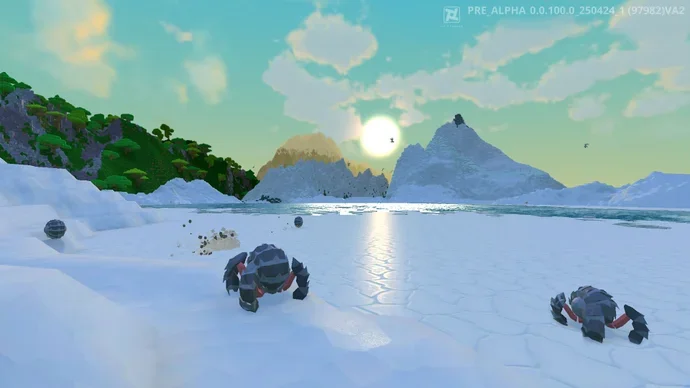
Another bolder change is the story. Gomez previously worked on projects like Silent Hill: Downpour, and he didn't want Reforj to leave narrative as an afterthought once the game became popular. The game features a conflict between two civilizations, the Gatekeepers and the Tunnellers, with ruins, artifacts, and legacy technology scattering clues throughout the world. However, it doesn't force every player to follow the plot; you can just build houses, or you can follow the clues to research why the world ended up this way.
This persistence stems somewhat from observing the later state of Minecraft. A blank world once allowed countless players to tell their own stories, but when an IP is slated for movies and expanded across more media, it becomes awkward to define its history and rules. Reforj chooses to prepare a discoverable narrative thread first, then leaves the right to engage with it to the player. This trade-off may not suit everyone, but it is far more honest than forcing lore in after the fact.
4J Studios also brought on Joseph Garrett—known to many players as Stampy—to join the design team. He proposed the Aura system and was deeply involved in adjusting the sculpting controls. The team describes his role quite bluntly: when you build a basketball, you hand it to a professional player to test. The real value isn't them saying "it's good," but them being able to tell you immediately what feels wrong. Having someone who has created a massive amount of Minecraft content to critique the "feel" is indeed more useful than a pile of pretty concept art.
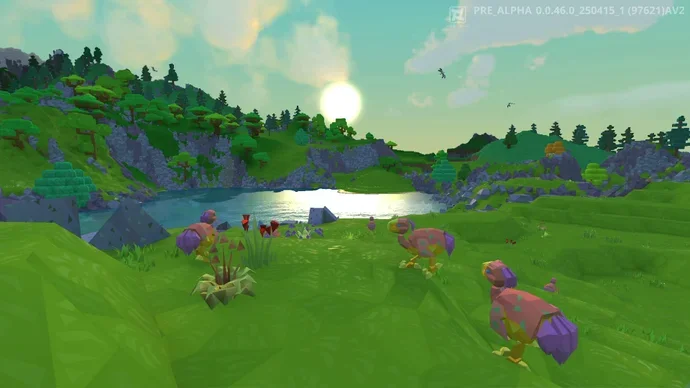
Therefore, the most noteworthy thing about Reforj is not whether it resembles Minecraft, but whether it has the courage to set that comparison aside. 4J Studios admits they don't expect players to abandon Minecraft. This was never meant to be an "either-or" choice, just as people who play Halo don't stop playing Call of Duty forever. The only question is whether the new game can provide a clear enough reason for people to be willing to learn how to build and survive all over again, outside of the familiar blocky world.
Reforj is still in the testing phase, and an Early Access date has not yet been announced. It is a long way from proving itself; whether sculpting will become tedious, whether the story will distract from free-form building, and whether the performance promises can hold up under multiplayer destruction—all these remain to be tested by players. But at least 4J Studios hasn't treated their past decade of experience as a safety net. They have unearthed the most easily overlooked limitations first, and then decided what a new sandbox should look like.
Many games try to be the "next Minecraft," which sounds like ambition but often just means they lack their own questions. Reforj's questions are more specific: when blocks are no longer just blocks, when consoles no longer need excuses for frame drops, and when stories don't have to be forced on everyone, how much of the original ease can a sandbox retain? That answer is likely more worth waiting for than just how many more shapes it has.